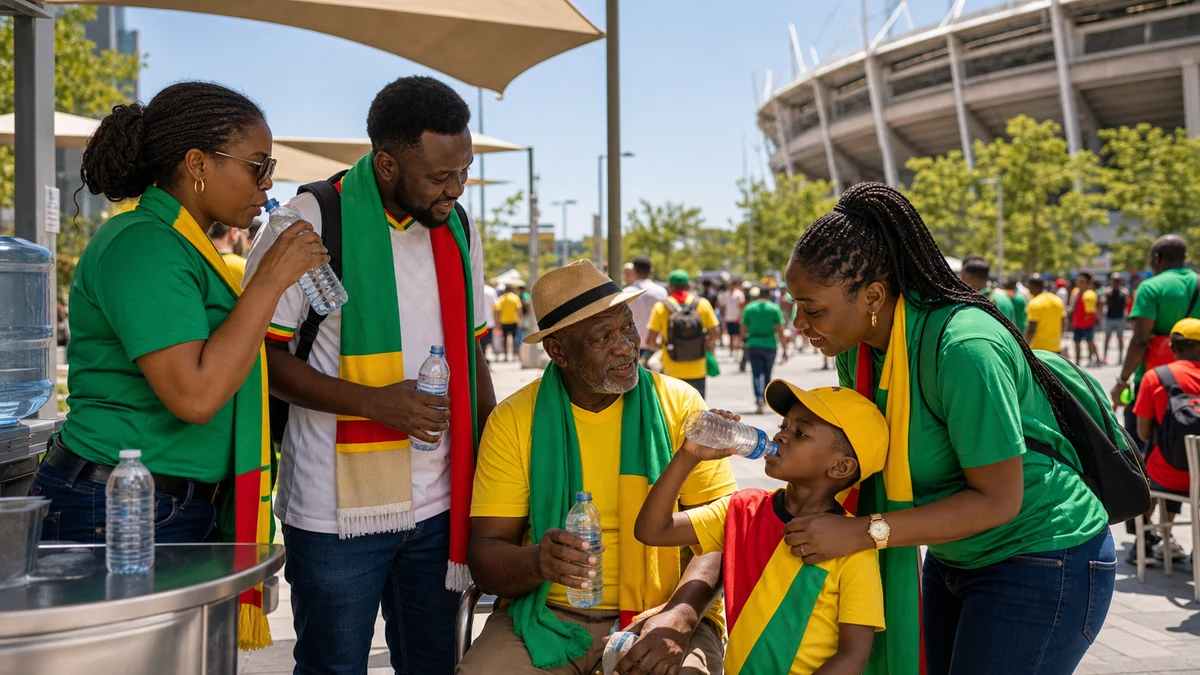
World Cup 2026 will be played across cities with different summer conditions, and many supporters will spend long days in transit, queues and crowded fan areas. Heat that feels manageable during normal life can become harder when people are standing on pavement, wearing team colors and waiting for gates to open.
Hydration is not just a bottle of water bought at the last minute. It is a day-long habit: drinking steadily, eating something light, choosing breathable clothing and using shade whenever possible. Fans who wait until they feel very thirsty are often already behind the day.
Families and supporter groups can make a small safety plan before leaving. They can decide who carries extra water, who checks on children or older relatives, where the group will rest if someone feels unwell and how to contact medical help. The plan does not need to be dramatic. It needs to be understood. The strongest groups also agree on a simple signal for stopping, so a tired person does not have to argue while already feeling unwell.
Shade and timing can save money as well as health. Arriving early may be smart, but only if there is a place to sit out of direct sun. Post-match gatherings can be fun, but tired supporters should rest before joining another crowded line. Heat stress often grows during waiting periods rather than during the match itself.
Some symptoms should stop the celebration immediately. Confusion, severe weakness, very hot skin, fainting, chest discomfort or trouble breathing are not things to cheer through. A group should be ready to seek help quickly instead of hoping the feeling passes.
A good supporter is not only the loudest person in the section. It is someone who prepares for a long day, checks on friends and gets home safely. When heat planning is part of the trip, the match is more likely to remain a happy memory.