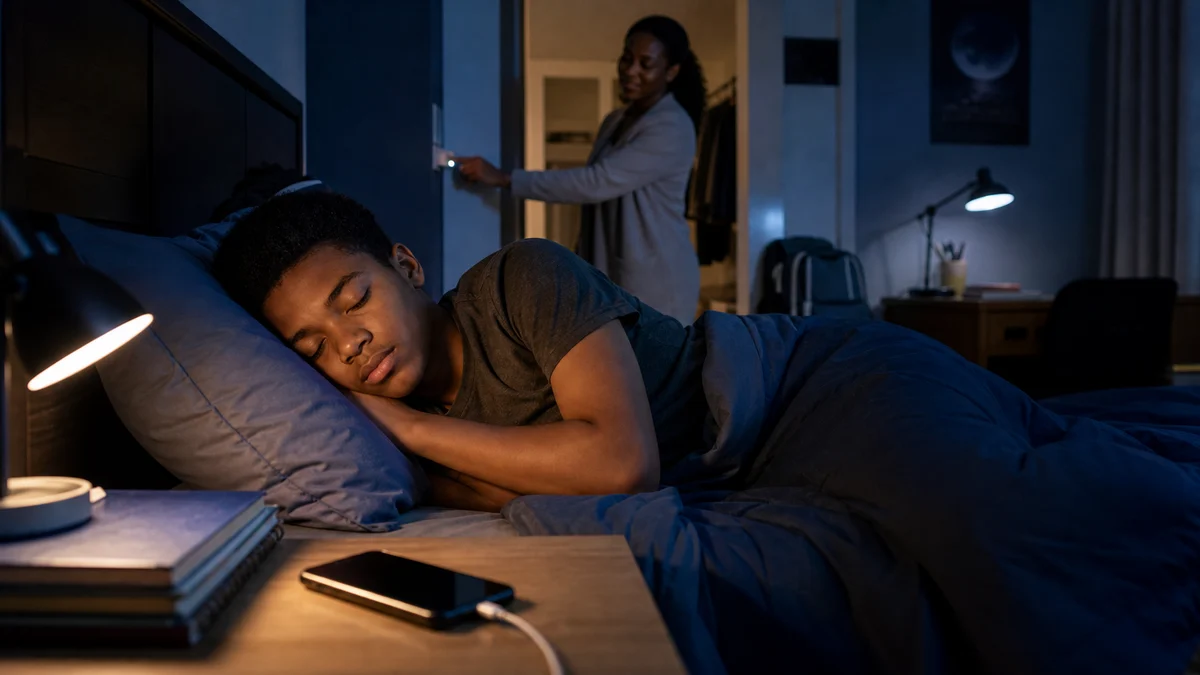
Screens are now part of teenage life. Students use phones for school groups, entertainment, music, sport, friendships and family contact. The problem is not that every screen is harmful. The problem begins when screen time pushes sleep, movement and calm family routines out of the day.
Sleep is central for memory, mood, growth and concentration. A teenager who sleeps too little may look lazy or rude when the body is actually tired. Late-night scrolling can keep the mind alert, and notifications can turn bedtime into another social space.
Families often argue about phones because both sides feel misunderstood. Parents see distraction and risk. Teenagers see connection, homework and independence. A better conversation starts with the shared goal: enough sleep, safer use and time for school, chores, friends and rest.
Practical rules work better when they are specific. Charging phones outside the bed, setting a quiet hour before sleep, turning off non-urgent notifications and keeping meals screen-light can help. A rule that adults also respect is easier for teenagers to accept.
Schools can support healthier habits by avoiding unnecessary late-night messages and teaching students how platforms are designed to hold attention. Digital literacy should include the body, not only privacy and misinformation.
The useful balance is not panic. Phones are tools, social spaces and entertainment. But sleep is not optional. When screen habits protect sleep, teenagers have a better chance to focus, manage emotions and use technology without letting it control the night. Families can review the rule after a few weeks, because habits are easier to keep when teenagers can explain what works and what feels unrealistic. The point is a repeatable routine, not one angry argument at bedtime. Small changes work best when the whole house treats sleep as shared health, not only a teenage problem every night at home.