High blood pressure often has no obvious warning signs, so home readings can be useful. But one number can create unnecessary fear or false comfort. What helps more is a log collected over several days, at similar times and shared with a clinician.
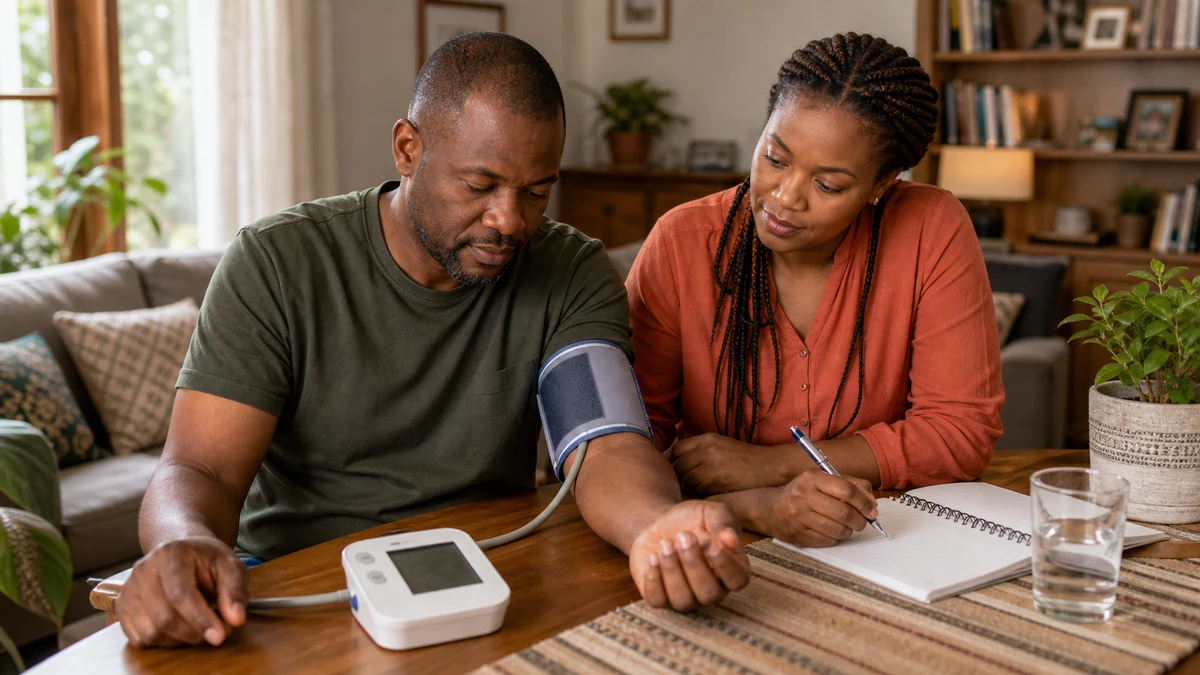
Good home measurement starts with a calm routine. A person should sit quietly, support the arm properly and avoid talking while the device works. Taking two readings a few minutes apart and writing both down gives the clinician more reliable context.
The log should include more than the numbers. Date, time, medicine timing, sleep, stress, exercise and symptoms can explain why readings move. The goal is not for the patient to diagnose themselves. It is to give the health worker a better picture. A short note about caffeine, pain or a missed dose can also prevent one unusual reading from being treated as the whole pattern.
Families can help without turning the process into pressure. If an older relative needs reminders, the household can prepare a simple paper log or set a gentle phone reminder. The readings should be handled with privacy and respect, not announced in a way that embarrasses the person.
Repeated high readings should be discussed with a clinic, especially if severe headache, vision changes, chest pain or breathing trouble appears. A home log does not replace medical advice, and people should not stop or change prescribed medicine based only on home numbers.
A clear log improves the conversation. It helps the clinician see whether a reading is a one-day event or part of a pattern. It also helps families know what to ask. The numbers matter most when they come with context. It can also show whether a change in routine, sleep or medicine timing deserves a careful follow-up question. before the next visit.