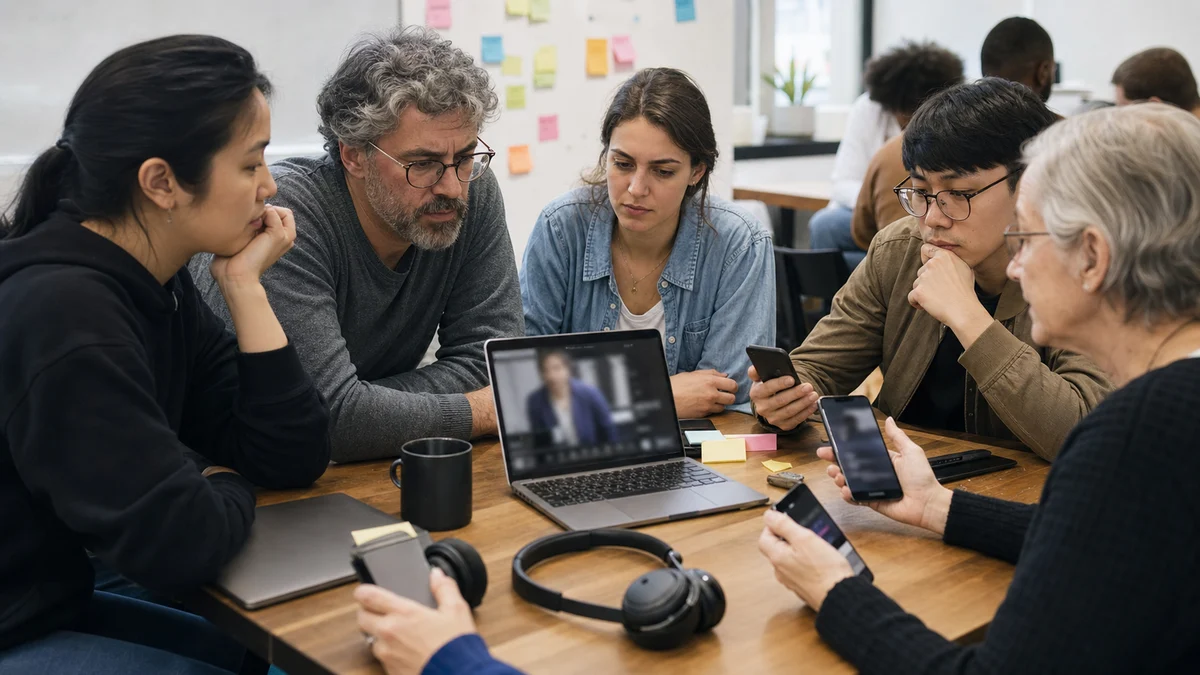
Deepfake and synthetic voice clips have made sharing more complicated. A video can be real, edited, old, out of context or made to imitate someone. A reader who only studies face movement can still be wrong. Community trust needs a process that tests the claim before emotion carries it forward.
The first check is the source. Who published the clip? Is there an original post? Has a newsroom or official body had time to examine it? If the clip concerns an election, health warning, public safety issue or celebrity scandal, fast sharing can damage a name or create panic.
The second check is context. An old video can return during a new crisis. Audio can come from a different event. A caption can claim something the video itself does not show. Claim checking asks not only whether the image looks smooth, but whether date, place, speaker and event match.
Communities can use a simple rule: strong claims need strong confirmation. If a video says a leader made dangerous remarks, a bank has collapsed or a medicine is harmful, people should not rely on one post. Official response, a trusted newsroom and the original account can all help.
Detection tools may help, but they should not become the final judge. A tool can be wrong, and an edited but real video can still mislead. Human judgment, outside evidence and patience remain necessary. Fast sharing is often rewarded by platforms, but slow verification protects the community.
The practical habit is to ask: who posted it, when, where and what independent evidence supports it? If the answers are missing, do not share yet. In the deepfake era, trust does not mean believing everything. Trust means a community has the discipline to wait for facts.
Group admins can help with a visible rule: sensitive clips need a source link or context note. If someone posts a clip without context, the admin can ask calmly. The rule protects everyone, including the person who posted it.