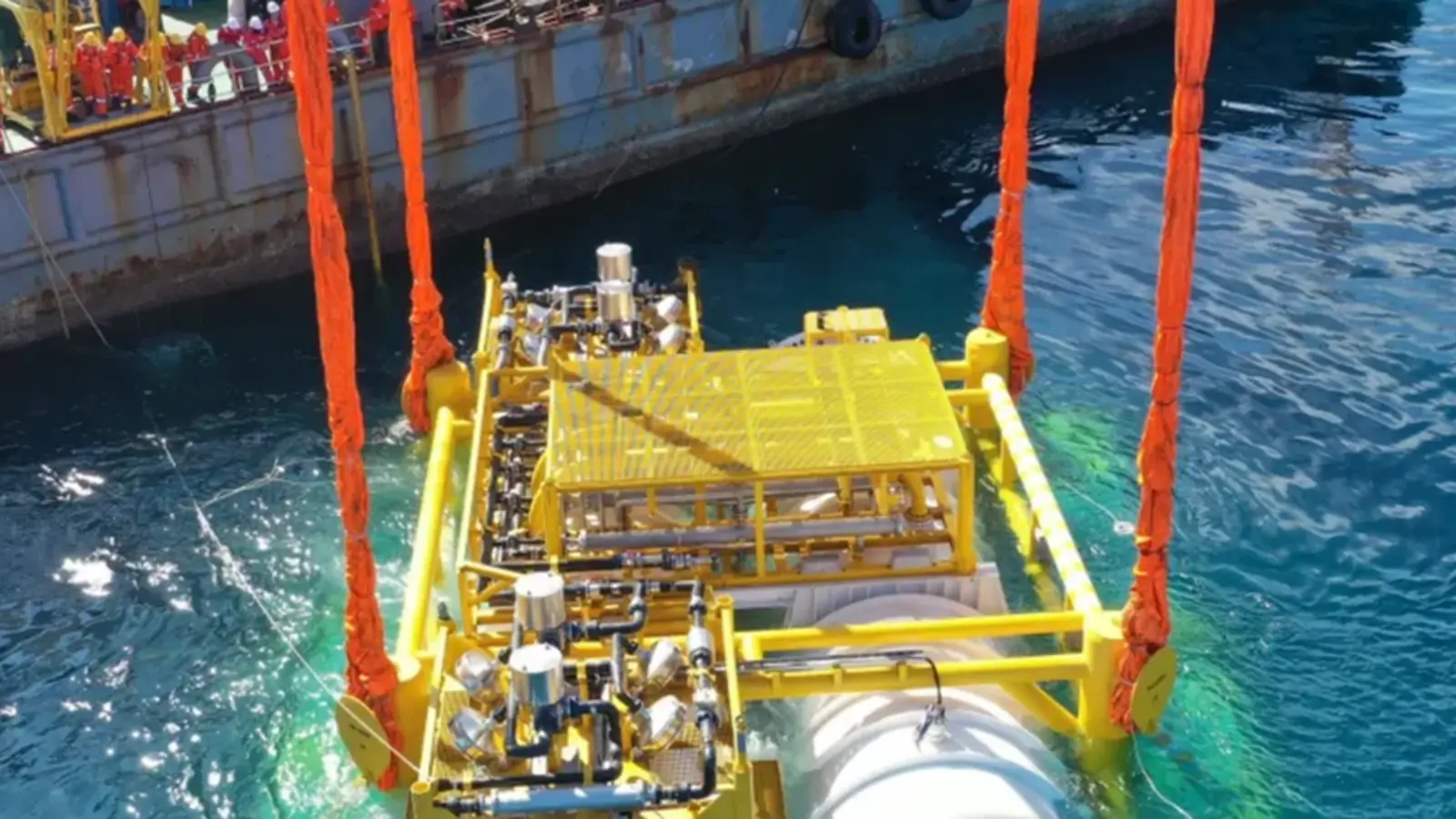
China's undersea data center project near Shanghai points to a bigger problem in the digital economy: data storage and computing keep growing, and cooling those systems takes serious energy.
Traditional data centers rely on large buildings, power supplies and cooling equipment. As cloud services, streaming and heavy computing workloads expand, governments and companies are testing ways to reduce waste.
Putting modules underwater can use the surrounding seawater as a cooling advantage. If the system is powered by offshore wind, it can also reduce dependence on electricity produced from fossil fuels.
The idea is not simple. Equipment placed under the sea must resist pressure, corrosion, leaks and difficult repair conditions. Reliability becomes more important because technicians cannot walk into a server room.
Environmental monitoring is also essential. Operators must understand heat release, seabed impact, noise, maintenance waste and what happens if equipment fails near marine life.
Previous experiments, including projects by technology companies, showed that underwater data centers can be technically possible. The question is whether they can work safely and economically at larger scale.
The project also matters because coastal cities often have high data demand and limited land. If undersea designs mature, they could become one option for places where land and cooling are expensive.
For African coastal economies, the lesson is not to copy the model immediately. The lesson is to connect digital infrastructure planning with energy, climate, regulation and local technical capacity.
Data centers are becoming part of national infrastructure, like ports and power grids. A country that wants digital growth must ask where computing happens and how much energy it consumes.
The safest conclusion is cautious interest. Undersea data centers may help solve cooling and land problems, but they need transparent testing before anyone treats them as a universal answer. Readers should also watch who verifies the environmental claims, because energy savings are only meaningful if cooling, maintenance and seabed impact are measured openly.